
A newly assembled drawer that sticks, sits crooked or stops short needs a careful check before you push harder. Start with the exact product manual, remove loose contents if you can do so safely, and note where the drawer catches. The cause may involve the drawer's position, its connection to the runners or the furniture assembly. Adjustment steps vary by model.
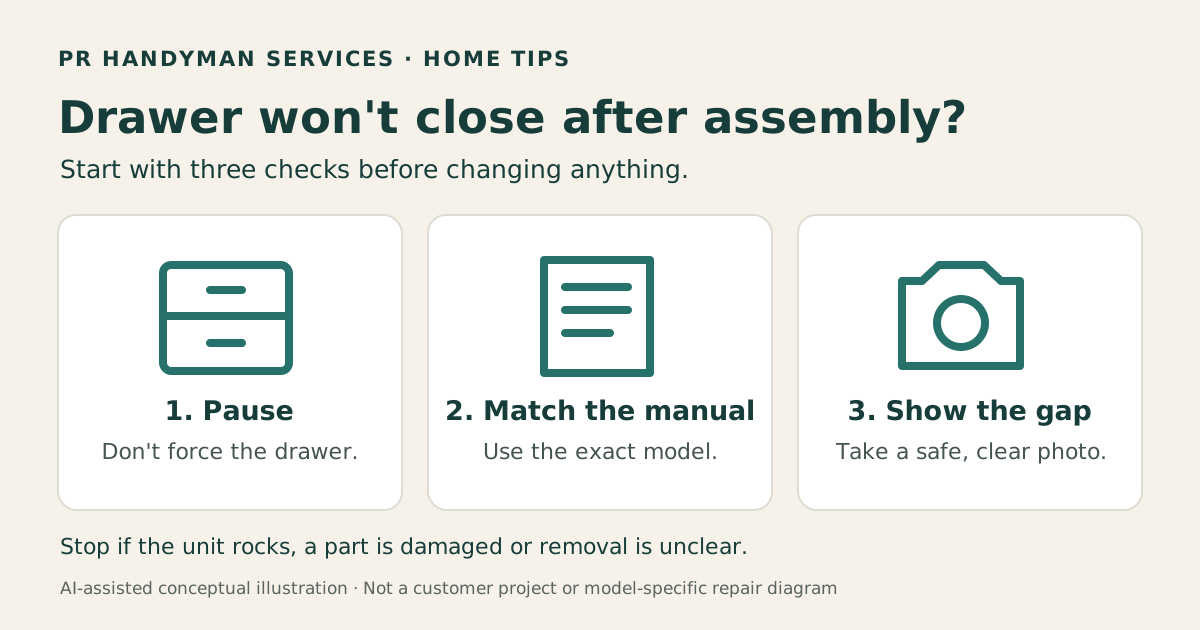
First, stop forcing the drawer
Don't slam it, lean on the front or use the handle to pull the furniture around. Keep children away from the work area. If the furniture rocks, a panel is cracked or a runner is bent, stop using the drawer and arrange an inspection.
For a dresser or other storage unit, confirm that the required wall restraint is installed before testing drawers. CPSC's Anchor It guidance emphasizes anchoring furniture with drawers, doors and shelves to prevent tip-overs. See our furniture wall-anchoring guide for the details to gather.
Describe what happens before changing anything
If the furniture is stable and the drawer moves without force, make one gentle check and write down the symptom:
- Does the drawer stop at the same point each time?
- Does one side sit higher than the other?
- Does the front touch another drawer or the cabinet?
- Does it close when empty but catch with items inside?
- Is one drawer affected, or are several?
These observations help explain the problem. They don't identify the cause on their own. Don't open several drawers together to compare them.
Look for loose packaging or an item visibly blocking the path. Remove only what you can reach safely without reaching behind a stuck drawer or putting fingers into the slides. Keep the drawer empty while the problem is being assessed.
Match the drawer to its own instructions
Find the manufacturer, product name, model or article number and the matching assembly document. A similar-looking dresser can use different runners, release tabs, locking clips or adjustment hardware.
Check the manual's diagrams for the affected drawer, including its position in the unit, part labels, runner orientation and specified fastening locations. Inspect what is visible; don't dismantle the furniture just to compare it with a picture.
IKEA's MAXIMERA guidance is a useful example: the assembly steps depend on where the drawer sits in the cabinet. Its adjustments should not be copied onto a different drawer system.
Check the connection before assuming the slide is faulty
Some drawer systems must be seated and locked onto their runners. IKEA's BESTÅ troubleshooting guidance specifically points owners to that connection. Other products use different mechanisms.
Sauder also provides separate assembly help for identifying rails, inserting drawers and adjusting different drawer types. That is why a universal “turn this screw” fix can lead you in the wrong direction.
Follow only the instructions for your exact product. If the manual is missing or the release mechanism is unclear, ask the manufacturer or an assembler before removing the drawer. Don't bypass an interlock or other safety feature.
Avoid turning a small issue into damaged furniture
Hold off on drilling new holes, sanding a drawer front, bending a runner, substituting screws or spraying lubricant into the mechanism. First establish what the manufacturer specifies and whether a part is damaged or incorrectly installed.
If hardware is missing or damaged, record its part number and take a clear photo for the manufacturer. Our missing-parts checklist explains what to gather before requesting a replacement.
A quick checklist before asking for help
- Exact product link, model number and assembly manual
- Which drawer is affected and where it stops
- A photo of the full unit with drawers closed as far as they safely go
- A close-up of the uneven gap or visible obstruction
- A photo of accessible hardware, without forcing or dismantling anything
- Any missing parts, cracks, bent metal or assembly steps you're unsure about
Send photos privately and keep personal documents, addresses and family photos out of the frame. You don't need to reproduce the fault on video if doing so feels unsafe.
Need help with furniture assembly in Raleigh or the Triangle?
Review our furniture assembly service, then request an estimate with the product details and a short description of the drawer issue. We'll use those details to discuss the next step. Photos can help with planning, but the cause and repair scope may need an in-person assessment.