
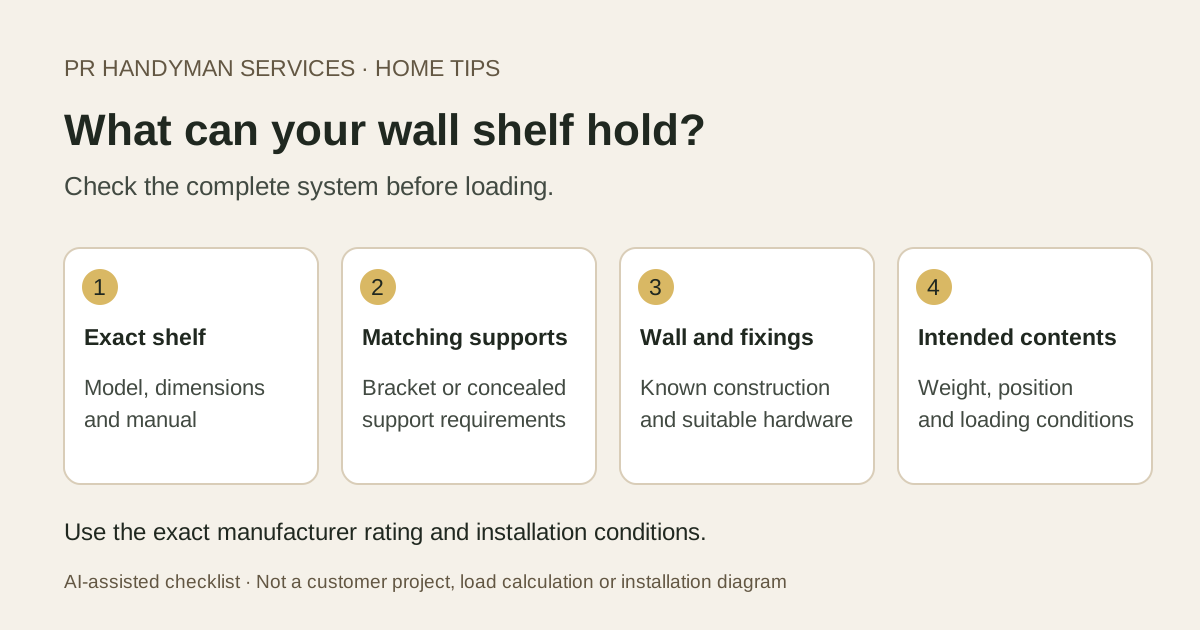
There is no universal wall-shelf weight limit. A shelf's capacity depends on the exact shelf and support system, the wall and fixing method, and how the contents are loaded. Start with the model-specific rating and installation instructions. A number on an anchor package alone does not establish what the completed shelf can hold.
1. Identify the complete shelf system
Save the shelf's exact model, length and depth, plus the bracket or concealed-support model and the installation manual. A shelf board and a bracket sold separately need a confirmed compatible combination. Check any required number, placement and spacing of supports in that system's instructions before buying.
For one specific example, IKEA's white LACK 43 1/4 × 10 1/4 inch shelf, article 902.821.80, currently lists a maximum load of 22 lb and includes hidden suspension brackets. That number belongs to this product; it is not a rating for every floating shelf or for an unknown installation.
2. Check the wall and fixing conditions
The matching LACK installation guide requires the supplied wall-attachment devices, an assessment of the wall's suitability, and screws and plugs suited to the wall and intended load. It directs readers to professional advice when uncertain. Wall screws and plugs are not included.
Record what is known about the proposed wall and leave unknown construction marked unknown. Paint, an existing hole or an old shelf does not establish a suitable fixing location. Have uncertain wall/support conditions assessed before drilling or loading. Do not multiply the rating on one anchor by the number of fasteners to invent a shelf capacity, or substitute hardware without confirming compatibility.
3. Plan the actual contents
List what you want to store, its weight when known, and where it will sit. Books, pottery and filled containers can make a display heavier than it first looks. Include the full contents of a container, rather than only its empty weight. Keep unknown weights explicit instead of estimating capacity by appearance.
Check the manufacturer's loading conditions, including any requirement about distributing weight. If the documentation does not explain the load arrangement you intend, ask the manufacturer before relying on the rating. A concentrated item or an item projecting beyond the shelf needs its own compatibility check. Do not test an uncertain installation by adding weight, pulling on it or leaning on it.
A load plan to copy before requesting help
Keep one note per shelf: model and dimensions; matching support model; manual rating and loading conditions; wall information (or unknown); contents and known weights; proposed positions; questions still unresolved.
For example, “books plus a plant” is not a usable weight record. List the books and the plant together with its pot and contents; record measured weights only when you can do so safely. If a weight or wall detail is unknown, leave it unknown and resolve it before choosing or relying on a rating. This organizes the request; it does not calculate an allowable load.
4. Treat an existing shelf's capacity as unconfirmed
A shelf that has stayed up so far does not provide a documented rating. Find its model and manual and have its installation checked if the wall, fixings or support history are unknown. Keep people clear of a shelf showing movement, gaps or wall damage and stop adding or using stored items until it is assessed. Avoid handling a shelf or contents that may fall; get qualified help when safe removal is uncertain.
5. Send a useful shelf-installation request
- Shelf and support product links, models and manuals
- Number of shelves and their listed dimensions
- Intended contents, known weights and proposed arrangement
- A wide photo of the wall and safe close-ups of existing hardware or visible damage
- Known wall information, access limits and required property-owner permission
For shelf-installation planning in Raleigh and the Triangle, send PR Handyman Services these details privately for a scope review. Unknown wall conditions may need an on-site assessment; the request does not confirm a load rating, price or appointment. See our furniture and shelving assembly service for related work, and use our estimate-photo guide to organize photos. Request an estimate when you are ready to discuss the project.